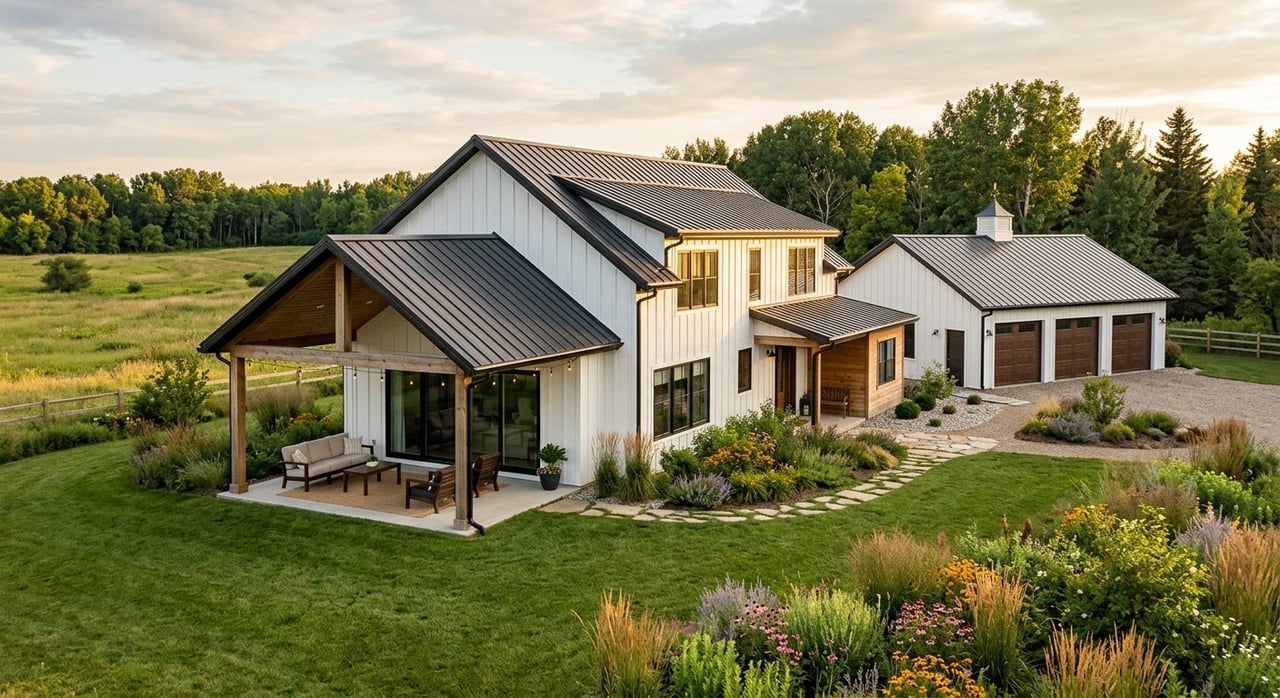
Your Guide to Tea SD Acreage and Edge-of-Town Homes
April 23, 2026
April 23, 2026
Looking for more space without feeling far from everything? Around Tea, that balance is a big part of the appeal. You can find room for a larger yard, a shop, or a lower-density setting while still staying just minutes from Sioux Falls. The key is knowing how acreage and edge-of-town properties actually work before you fall in love with the land. Let’s dive in.
Tea sits on the southwest edge of Sioux Falls, which makes it very different from a remote rural market. The City of Tea notes that it is just minutes from Sioux Falls, and it lists a population of 8,051 as of Jan. 1, 2026, with 900 housing units built since the 2020 Census. That kind of growth helps explain why land and larger homesites around Tea continue to get attention.
For many buyers, the draw is simple. You may want extra elbow room, a little more privacy, and a single-family home setup without giving up access to city jobs, shopping, and services. Around Tea, that combination is often possible, but the details matter.
Tea’s comprehensive plan executive summary shows the community is still mostly made up of detached single-family housing. That lines up well with what many acreage and edge-of-town buyers are looking for: space, a home that fits daily life, and proximity to Sioux Falls.
Not every larger lot near Tea is true rural acreage, and not every property outside a subdivision works the same way. Some homes are inside Tea city limits on larger in-town lots, while others sit in unincorporated Lincoln County under county zoning rules. That distinction affects what you can build, how utilities work, and what approvals may be needed.
Inside Tea, standard residential lots are often much smaller than what buyers picture when they hear “acreage.” The zoning ordinance referenced by Lincoln County shows the base R-1 district uses a 7,500-square-foot minimum lot, or 8,500 square feet for corner lots. The same ordinance also notes that parcels over 30,000 square feet are treated as estate lots for storm-drainage purposes, which gives you a useful benchmark for a larger in-town homesite.
Outside the city, the pattern changes. In Lincoln County, the RR Rural Residential district is intended for lower-density living and generally requires a 1-acre minimum lot area, though that can be reduced to 20,000 square feet where central sanitary sewer is available. The A-1 Agricultural district also uses a 1-acre minimum lot area for a single-family dwelling with building eligibility.
One of the biggest mistakes buyers make is assuming a parcel can be used the way they want just because it looks like open land. Around Tea, zoning is split between the city and the county, so your first step is always to confirm who regulates the property.
Tea’s Planning, Zoning & Building Services department handles city zoning, subdivision regulation, building codes, permits, and inspections. In unincorporated areas, Lincoln County Planning & Zoning handles zoning permits, building permits, conditional uses, floodplain permits, variances, and platting.
That means two properties with similar views and similar size can come with very different rules. If you are hoping for an outbuilding, future lot split, or a particular type of use, you need to verify that early. It is much easier to answer those questions before you write an offer than after closing.
In practical terms, edge-of-town living around Tea is usually still a low-density, single-family product. County districts such as RR and A-1 permit single-family dwellings and certain accessory uses. The RR district even allows resident-owned horse stabling by conditional use, which can matter if your vision for the property includes that kind of setup.
Still, every parcel needs a property-specific review. A plat, deed restriction, easement, or covenant can limit your plans even when zoning seems to allow them. That is why a good acreage search is not just about square footage and price. It is also about matching your goals to the actual rules attached to the property.
The biggest tradeoff with acreage and edge-of-town living is often not the house itself. It is the utility setup. Water, sewer, septic, and irrigation can shape both your monthly costs and your long-term maintenance.
If a property is inside Tea city limits and public sanitary sewer is within 300 feet of the property line, the city requires connection, according to the City of Tea ordinances. Private wastewater disposal is only allowed when public sewer is not available, and a permit is required for that system.
Tea’s water and sewer billing page gives helpful context on costs. New service customers pay a $50 water deposit, the residential minimum water and sewer charge is $63.25 even with zero consumption, and usage above 25,000 gallons is billed at $25 per 1,000 gallons. If you are thinking about a large lawn, irrigation, or heavy outdoor water use, those numbers matter.
The city also notes that it began pumping sewer discharge to Sioux Falls in January 2024 and uses smart meters. It specifically encourages water conservation and warns about future water-capacity issues. For a buyer, that does not mean avoiding larger lots. It means going in with a realistic budget and usage plan.
Once you move outside city service areas, the homework usually increases. For septic, Lincoln County requires an On-Site Wastewater System application for new or replacement septic systems and holding tanks. The checklist calls for an engineered system design, percolation tests or soils analysis, and an as-built showing the final system location.
Private wells add another layer. The South Dakota Department of Agriculture and Natural Resources says a licensed well driller is generally required, and each new domestic well must have a water sample submitted to the state lab or another approved lab. If you are considering a property with a private well, testing and documentation should be part of your review.
This is where experienced guidance can save you time. A great-looking property can still need more evaluation than a typical in-town home. Understanding the utility setup upfront helps you avoid surprises later.
Some buyers look at a larger tract near Tea and immediately wonder whether it can be split in the future. That may be possible, but it should never be assumed. County and city rules, existing plats, building eligibilities, and access issues can all affect what happens next.
Lincoln County’s plat application asks whether a plat is residential or agricultural, how many lots are being created, and what building eligibilities are assigned with the plat. A preliminary subdivision plan is also required for proposed subdivisions of more than three lots.
If future flexibility matters to you, make that part of your buying strategy from day one. A property that works well as a homesite may not work the same way as an investment play or future split opportunity.
Zoning is only one piece of the puzzle. Private restrictions can be narrower than public code, which means the deed, plat, easements, and any homeowners association documents deserve separate review.
Lincoln County defines a deed restriction as a clause that can limit the future use of property in its recorded documents. In plain terms, even if county or city zoning appears to allow something, a recorded restriction may still limit what you can do. That is especially important for buyers considering shops, accessory structures, or other improvements.
A careful document review is one of the smartest steps you can take with acreage. It protects your plans and helps you buy with confidence.
Space is the selling point, but it often comes with tradeoffs. Acreage on the edge of Tea may sit near active farm ground, and that can affect the day-to-day feel of the property.
Lincoln County requires an agricultural-neighborhood notice that warns nearby lawful farm operations can involve noise, odors, dust, smoke, vibrations, insects, and machinery. For many buyers, that is simply part of the setting. The key is knowing what comes with the location so your expectations match reality.
That does not make these properties less appealing. It just means edge-of-town living works best when you appreciate both the benefits and the practical realities.
This type of property often appeals to buyers who want a single-family home with more breathing room while staying close to Sioux Falls. You might be upsizing, relocating, or simply looking for a property that gives you more outdoor space and flexibility than a standard subdivision lot.
It can also be a great fit if you are comfortable doing a little more due diligence. Compared with a typical in-town purchase, acreage near Tea may require more questions about utilities, zoning, plats, floodplain status, and restrictions. That extra work is often worth it when the property truly matches your lifestyle.
If you are serious about acreage or edge-of-town living, it helps to keep a short checklist in mind:
Acreage purchases are rarely one-size-fits-all. The right property is the one that fits your goals, your budget, and the rules attached to the land.
If you are weighing acreage, estate lots, or edge-of-town homes around Tea, having a local guide can make the process much clearer. Berberich Real Estate Group can help you compare options, ask the right questions early, and move forward with confidence.

Our agents are committed to keeping you informed about all relevant aspects of the sales process – from lead generation to actual sale. Simply put, our agents will keep you posted every step of the way.