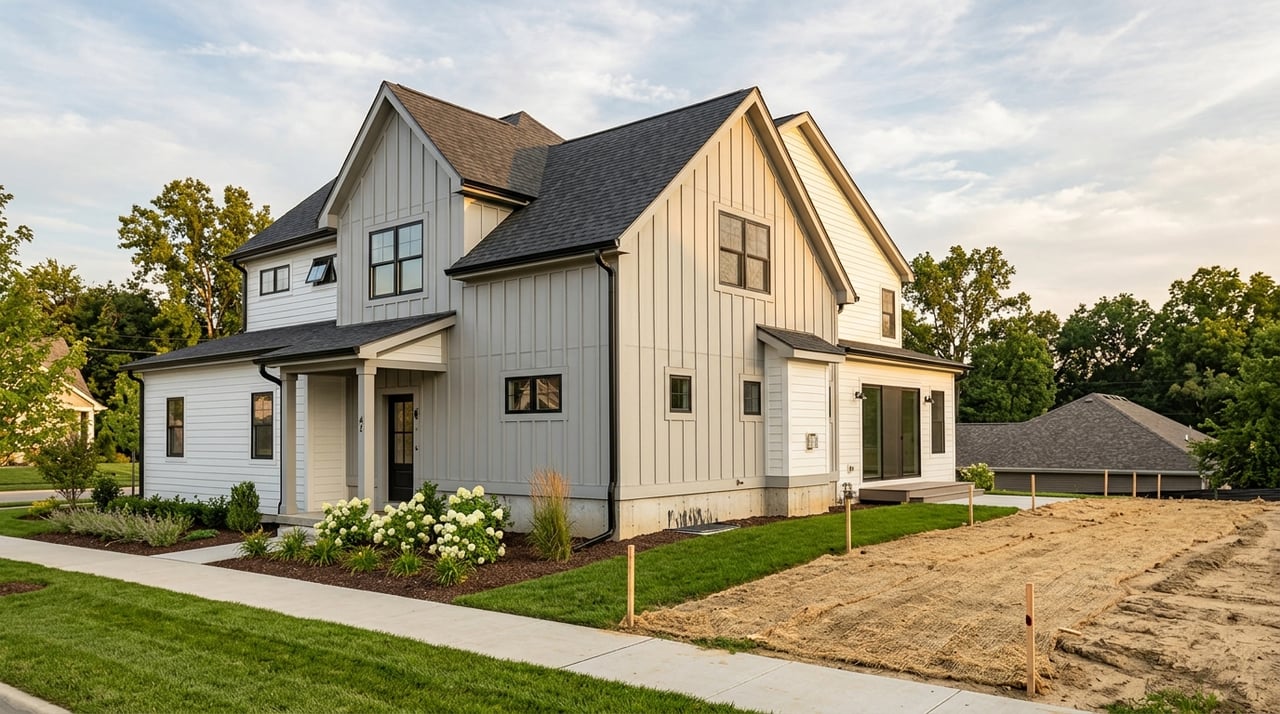
Harrisburg New Construction Guide for Choosing a Lot
July 9, 2026
July 9, 2026
Thinking about new construction in Harrisburg? The lot you choose can shape your day-to-day life just as much as the floor plan you build on it. If you want to avoid surprises about future phases, utilities, school boundaries, or neighborhood rules, it pays to look past the sales sheet before you commit. Let’s dive in.
In a new-construction community, the lot is not just where your home will sit. It can affect your timeline, your privacy, your utility setup, and even what you are allowed to build.
That matters in Harrisburg because the city is continuing to grow and add infrastructure. The city’s comprehensive planning and capital improvement process help guide future development, transportation, utilities, parks, and other public improvements as new areas are built out.
One of the biggest mistakes buyers make is choosing a lot based only on what they see right now. In newer areas, open land next door may not stay open for long.
Some Harrisburg-area plats and preliminary plans clearly show future phases, future lots, and even trail extensions that may come later. That means your backyard could eventually back to a future street, another row of homes, a trail connection, or additional development.
Before you choose a lot, ask for the most current plat and any available phase maps. You want to know what is planned behind you, beside you, and across the street.
This is especially important in developments where future phases are already identified. A lot that feels tucked away today may sit near a future construction area tomorrow.
Lot orientation affects more than curb appeal. It also affects how your yard relates to neighboring homes, streets, open space, and future development.
In Harrisburg, this can be a real quality-of-life issue because some plats specifically identify future phases or reserved land. A smart lot choice starts with understanding the bigger map, not just the current model home area.
A finished-looking neighborhood entrance does not always mean every lot is fully ready. In Harrisburg, development review and construction inspection involve both planning and engineering oversight.
The city coordinates plan and plat review through Planning & Zoning, while engineering handles inspection of sewer, storm sewer, water main, and streets. In practical terms, lot delivery may depend on infrastructure testing and acceptance, not just visible progress.
Harrisburg subdivision regulations allow the city to require a subdivision construction agreement, construction permit, and performance security before plat approval or before construction begins. Those agreements are tied to required public improvements.
Public improvements can include street grading, curb and gutter, drainage, water and sanitary sewer mains, lighting, signage, trails, parks, and playground equipment. So if you are buying in an early phase, ask what has been completed, what is still underway, and what must be accepted before your build can move forward smoothly.
Builder timelines and neighborhood timelines are not always the same. One builder example in the local market states that a typical home build may take about 4 to 5 months from excavation, depending on season and scope.
At the same time, Harrisburg subdivision rules generally expect required public improvements to be completed within two years of the agreement, with possible extensions. That is why it is important to understand whether the lot is fully ready now or part of a broader phased rollout.
Utility readiness can have a direct impact on cost, timing, and convenience. Two lots in the same general area may not offer the same level of utility completion.
Some Harrisburg-area developments market lots as already stubbed to services like rural water and city sewer. Others highlight access to natural gas, fiber, electric, and water at each lot. Those details matter because they can affect what additional connection work may still be needed.
These are simple questions, but they can save you from confusion later. They also help you compare one lot premium against another in a more practical way.
A lot map tells you where you can build. Covenants and restrictions help tell you what you can build and how the neighborhood is meant to function.
In Harrisburg, that matters because city zoning rules are minimum requirements. If zoning, deed restrictions, or covenants conflict, the stricter rule controls.
Some local covenants reserve easements for utilities and drainage, require developer approval for site plans and construction plans, and outline responsibility for roads, common areas, and maintenance. Some also allow additional land to be added later.
That means a lot that looks flexible on paper may still come with approval steps or design limits. Before you commit, review the covenants, HOA documents if applicable, and any builder or developer approval requirements.
If school assignment is important to your home search, do not assume the school is determined by the city name alone. In Harrisburg, school boundaries are a lot-specific issue.
The Harrisburg School District says it has one high school, a freshmen academy, three middle schools, and seven elementary schools, with schools located across Harrisburg and southern Sioux Falls. The district asks families to use its address lookup and boundary maps to verify the correct school assignment.
Two lots that seem close together can still have different school assignments based on their address. If that factor matters to your planning, verify it before signing on a lot rather than after the home is underway.
This step is especially helpful when comparing lots in Harrisburg proper with lots elsewhere in the district area. It is a small detail that can make a big difference in your decision-making process.
Neighborhood amenities can add real value, but they should be weighed carefully. A lot near a park, trail, or recreational feature may carry a premium, but that premium may be worth it if it fits how you plan to live.
Harrisburg’s park system includes places such as Central Park, Heartland Park, Lake Ole, Rover Range, and other neighborhood parks. Central Park includes disc golf, T-ball and softball fields, and a championship baseball field, while Lake Ole includes an ADA-accessible pier and paved trail.
A lot near a trail or park can be a plus if you want easier outdoor access. At the same time, you may want to think about visibility, traffic flow, and how close you want to be to active public spaces.
Some nearby developments also market access to shopping, golf, parks, or future transportation improvements. The key is to decide whether those amenities match your priorities, not just whether they sound appealing in a brochure.
Many buyers picture a fully custom process when they hear the words new construction. In reality, your options often depend on the community, the builder, and the stage of the build.
In builder-led communities, buyers often start by choosing the community, lot, and floor plan before moving into finish selections. One local builder describes a design-center process that uses curated packages, upgrade options, and a final review before the home is released to construction.
For fully custom homes, the process tends to involve more structure upfront. A local builder example outlines an early sequence that includes a project manager, a preliminary budget, and a design agreement covering plans, elevations, and finish allowances before a final construction contract is signed.
That is a good reminder that most meaningful customization happens early. Once construction is well underway, changes can become harder, slower, or more expensive.
The best lot on the map can still become frustrating if the contract does not fit your timing, flexibility, or comfort level. New-construction contracts often work differently from resale purchases, especially when the lot is part of a phased community.
You will want to understand when the lot is expected to be build-ready, how long the builder expects the home to take, and what happens if infrastructure or construction timelines shift. This is where clear communication matters most.
In Harrisburg, the details often sit across several places at once: plats, covenants, inspection steps, utility setup, school boundary tools, and builder contracts. Looking at each item separately can make the process feel more complicated than it needs to be.
That is where experienced buyer representation can help. Comparing lot premiums, checking future-phase risk, reviewing neighborhood rules, and aligning the contract with your goals can make your decision much more confident from the start.
If you are weighing new construction in Harrisburg, Berberich Real Estate Group can help you compare lots, understand the fine print, and move forward with a clear plan.

Our agents are committed to keeping you informed about all relevant aspects of the sales process – from lead generation to actual sale. Simply put, our agents will keep you posted every step of the way.